
On 20 March 2026, the 1st International Biennale AI Art. Creative Dialogue and Education with AI in Kraków came to a close after two weeks of intensive artistic, scientific, and educational exchange.
Bringing together exhibitions, conference sessions, workshops, artists’ talks, performances, and public discussions, the Biennale created a space for exploring the role of artificial intelligence in contemporary culture — positioned between fascination and critique, technological promise and ethical uncertainty.
Across both artistic practice and public discourse, AI was framed not only as a tool, but increasingly as a medium, a partner, and even a co-author, raising fundamental questions about authorship, agency, perception, and the conditions of human creativity.
The Polish Society for Aesthetics (PTE) contributed to this international exchange through activities developed within the CAPHE project (Communities and Artistic Participation in Hybrid Environments).
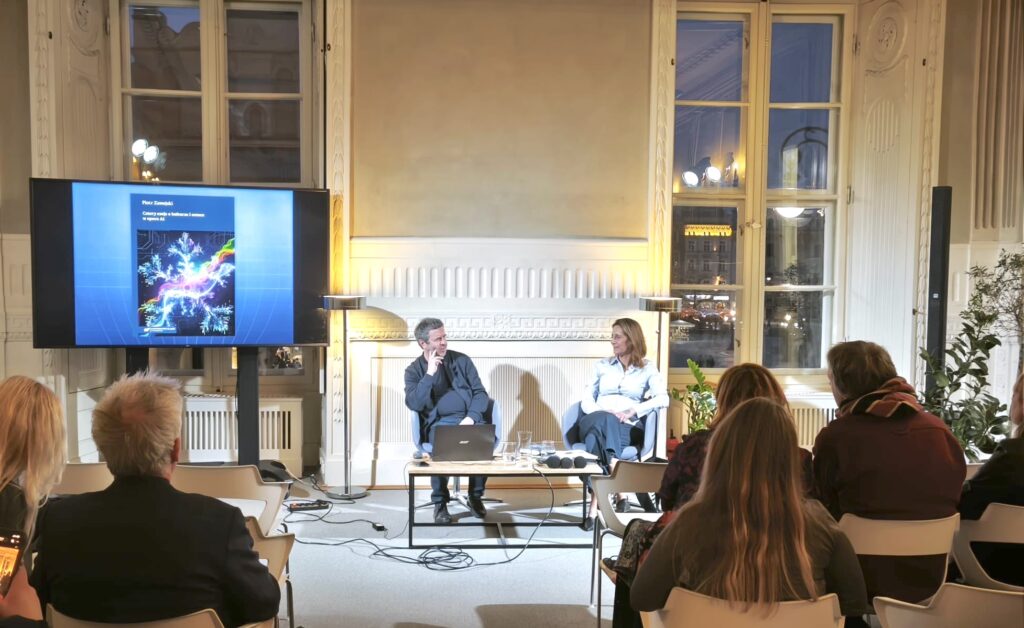
Photo by Patrycja Maksylewicz
Exhibition: [Un]conscious Algorithms
An important part of the Biennale — and a result of ongoing art-based research — was the exhibition “[Un]conscious Algorithms”, co-curated by Prof. Aleksandra Łukaszewicz and Dr. Patrycja Maksylewicz (Faculty of Intermedia, Academy of Fine Arts in Kraków).
The exhibition explored artistic approaches to algorithmic processes, perception, and the shifting boundaries between human and machine cognition. It invited audiences to reflect on how contemporary experience is increasingly shaped — and co-produced — by computational systems.
The exhibition was accompanied by a series of artists’ talks and performances, extending the curatorial framework into a live, discursive space and enabling direct engagement between artists, researchers, and audiences.

Photo by Aleksandra Łukaszewicz
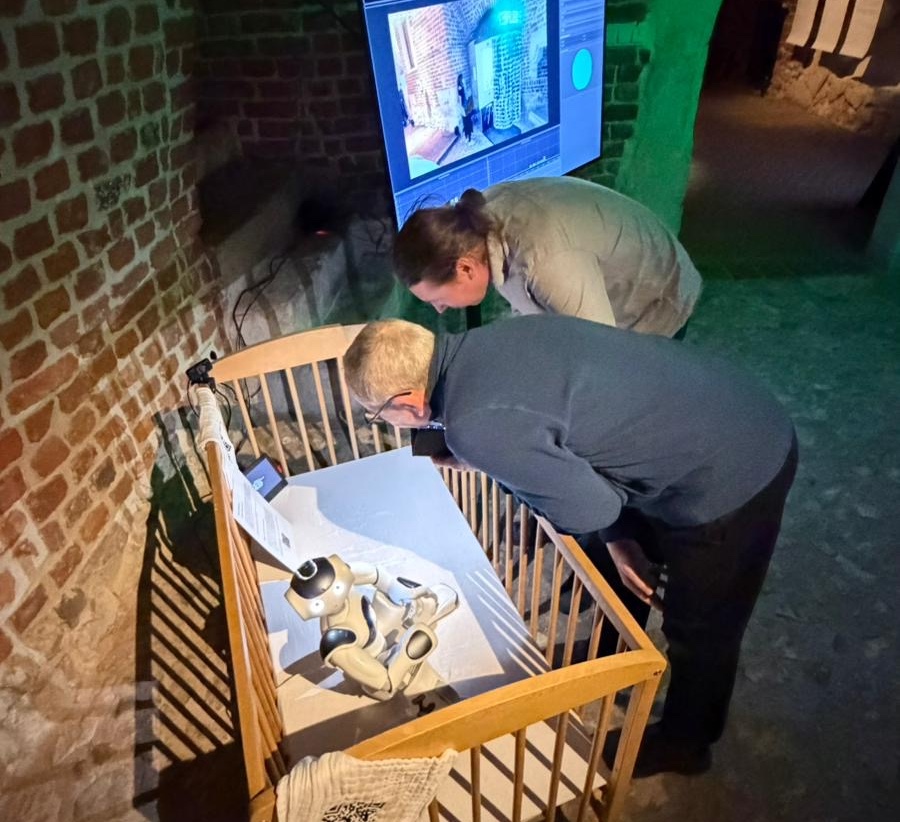
Photo by Kobas Laksa
CAPHE / PTE activity: conference contribution
Within the framework of CAPHE, Dr. Joanna Szczepanik (PTE) participated in the conference Creative Dialogue and Education with AI, held at Cogiteon – Małopolska Science Center.
In Session II – Art: Creative Dialogue with AI, she presented: “The Authority of the Algorithm: Artistic Visions of Synthetic Democracy in the Projects of Victoria Cukt and Leader Lars.” The presentation examined how artistic practices critically engage with algorithmic authority and how AI reshapes political imagination, representation, and democratic discourse.
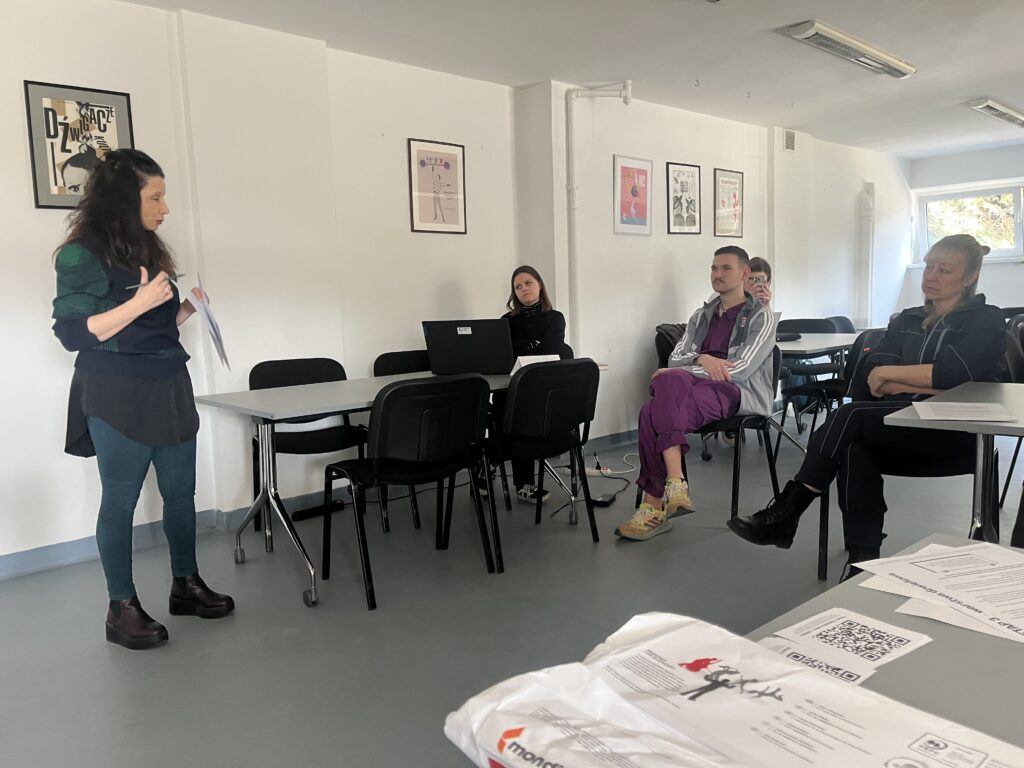
Photo by Aleksandra Łukaszewicz
CAPHE / PTE activity: workshop
Cracks of Meaning: Videopoetry in the Age of AI
As part of CAPHE activities the Polish Society for Aesthetics organized the international workshop: “Cracks of Meaning: Videopoetry in the Age of AI” held at Design Pharmacy in Kraków on 10–11 March 2026. The workshop was developed by the research-art collective set-up within PTE_CAPHE activities: VECT-AI (Virtual Embodied Critical Thinking – AI) with Joanna Szczepanik, Aleksandra Łukaszewicz, Justyna Gorzkowicz, and Jarosław Solecki.
At its core was a central question: How can art help us teach and practice critical thinking in the age of the technologies of the 4th Industrial Revolution?
Through work with videopoetry, VR, and AI-based tools, participants explored:
• the mechanisms through which AI systems simulate understanding,
• strategies for strengthening critical thinking and cognitive resilience,
• artistic methods for engaging with the epistemological limits of intelligent systems.
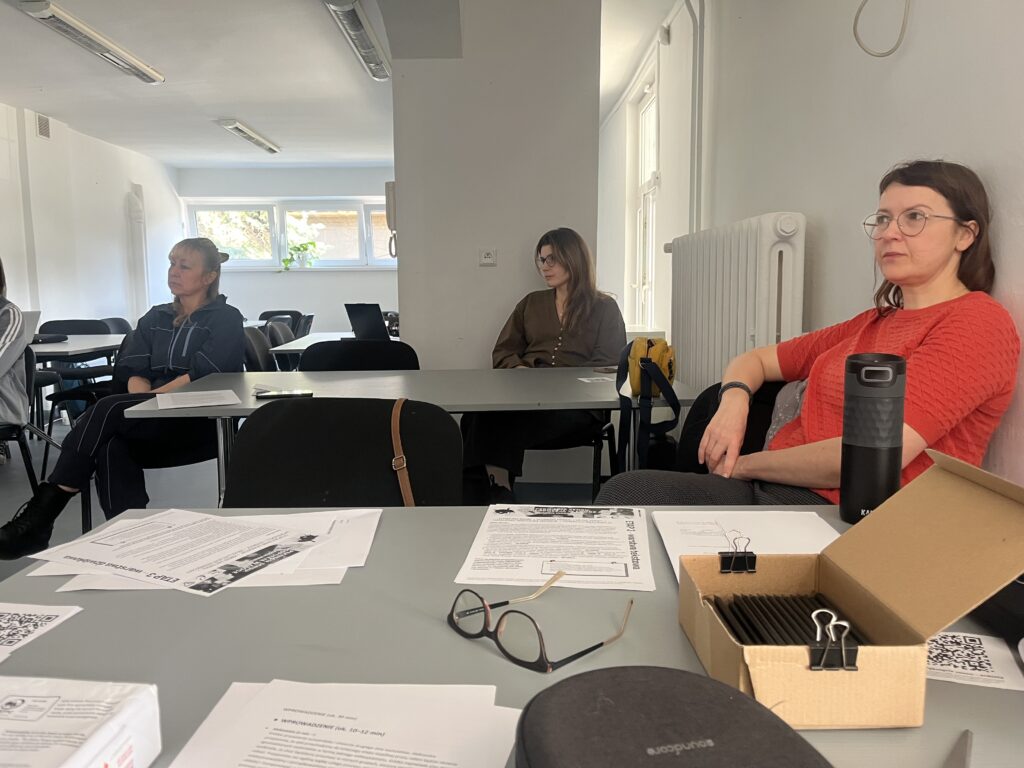
Photo by Aleksandra Łukaszewicz
Post-workshop installation
The workshop culminated in a videopoetic installation presented from 12 to 15 March 2026: “Obowiązki własnej ręki wciągniętej ( ) do środka / The Duties of One’s Own Hand Drawn ( ) Inward” curated by Aleksandra Łukaszewicz, Joanna Szczepanik, and Jarosław Solecki.
The installation translated the workshop process into a spatial and poetic reflection on embodiment, agency, and inward-directed cognition in the context of technologies of the 4th Industrial Revolution.
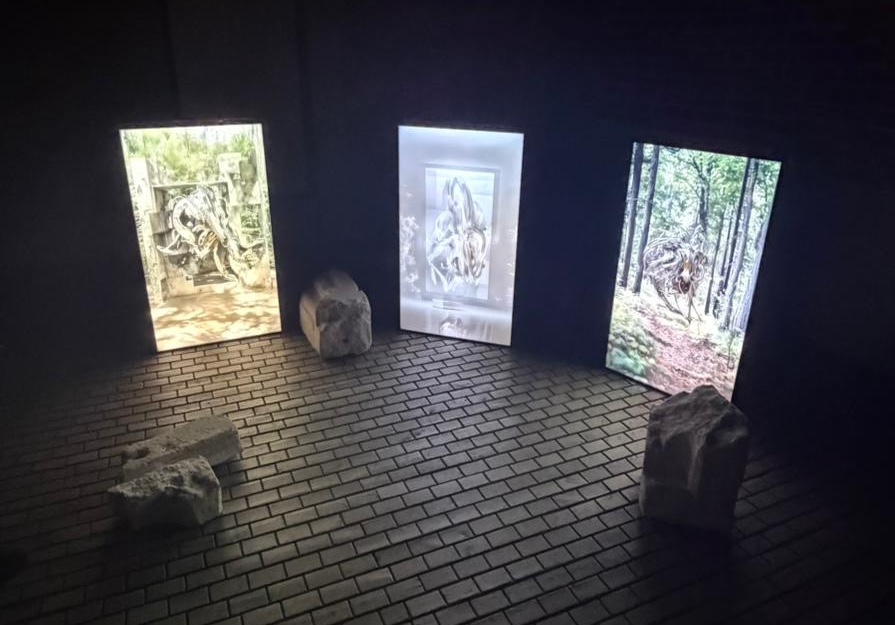
Photo by Kobas Laksa
By translating audiovisual heritage into a digitally navigable environment, the project exemplifies CAPHE’s methodological approach to integrating artistic production with XR technologies. It further demonstrates how immersive platforms can activate memory and identity as shared cultural resources, fostering dialogue across generations and geographical boundaries.
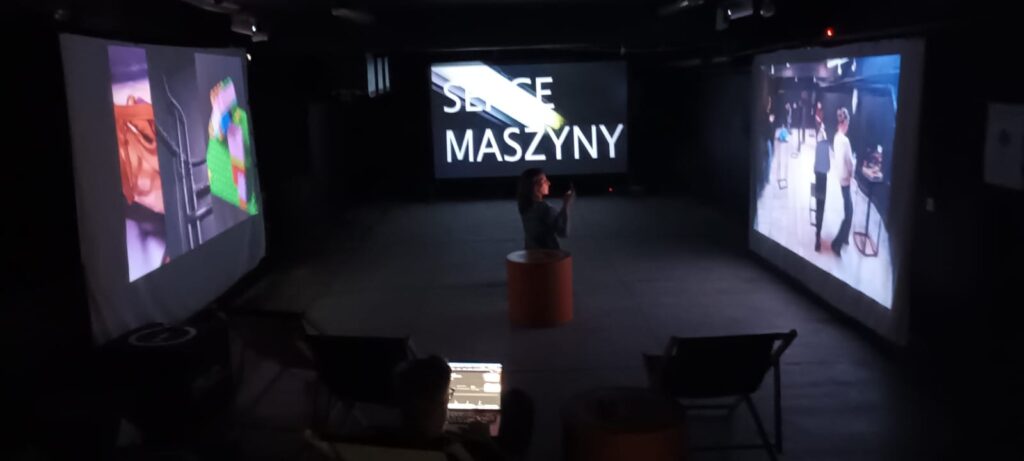
Photo by Aleksandra Łukaszewicz
CAPHE outcomes and dissemination
As a continuation of this work, an open-access educational scenario based on the workshop is currently being developed. It will be published on Zenodo, ensuring:
- authorship attribution
- the possibility of creating derivative works
- accessibility for educators, researchers, and cultural practitioners
The material will also be submitted as a Polish Society for Aesthetics contribution to a CAPHE report on media and material literacy in online and virtual education, prepared by the Faculty of Fine Arts, University of Lisbon.
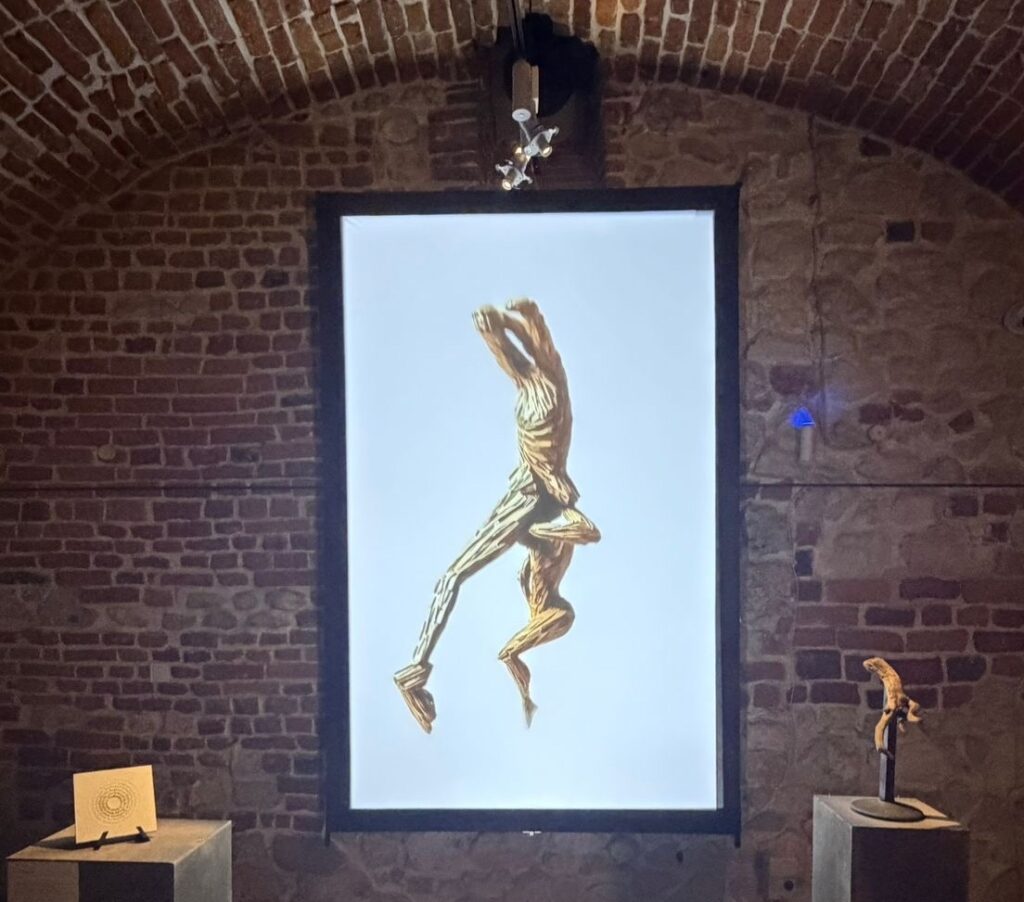
Photo by Kobas Laksa
Public discourse and media presence
The Biennale and its thematic scope were widely discussed in cultural and educational media, including Perspektywy, Polskie Radio 24, and Radio Kraków Culture.
These discussions highlighted the urgency of developing new artistic and educational approaches to understanding AI — not only as a technological system, but as a transformative force reshaping perception, knowledge, and social imagination.
For more information on the Biennale see: https://biennaleai.org/
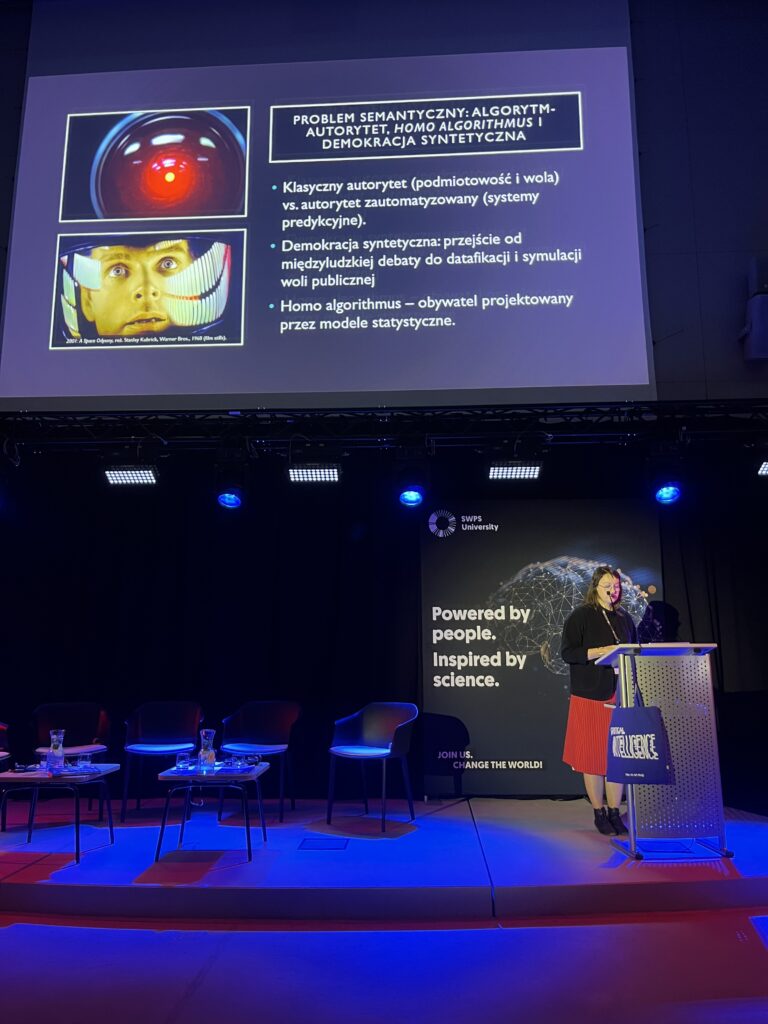
Photo by Aleksandra Łukaszewicz